Call before loading
Yard policies vary, and a short call can prevent a rejected load or a wasted trip.
- Confirm business hours, entrance instructions, and whether appointments are required.
- Ask whether the yard accepts every material in your load.
- Ask what identification, proof of ownership, payment delay, or vehicle documentation local rules require.
- Get the current quote for your expected grades and ask how long it is valid.
- Confirm preparation, size, minimum-weight, and container rules.
Sort and label the load
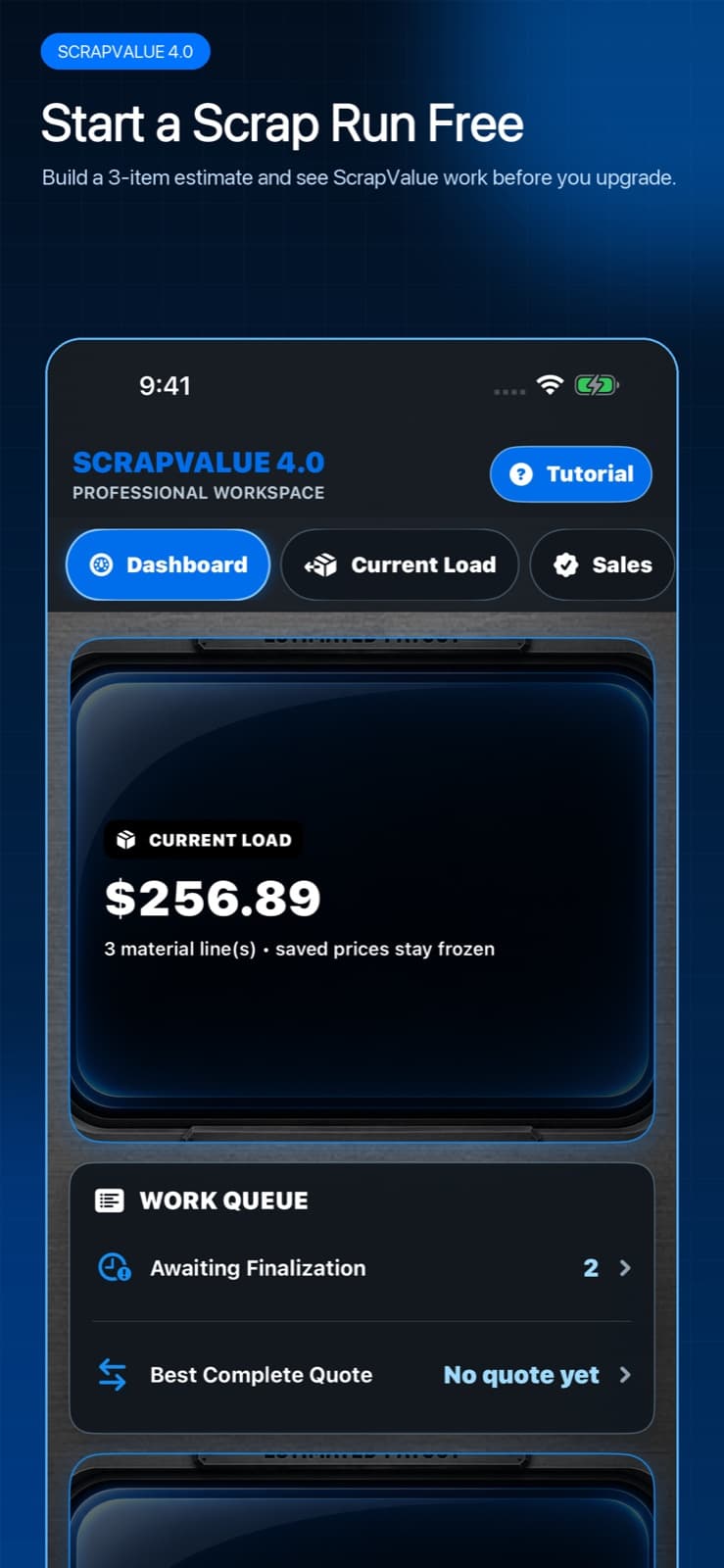
Keep different metals and grades separate when practical. Label bins or photograph groups so you know what was combined. Do not include closed cylinders, pressurized vessels, fluids, batteries, refrigerants, suspicious items, or hazardous materials unless the receiving facility has specifically confirmed its procedure.
Load for safety, not just speed
Scrap can be sharp, heavy, unstable, contaminated, or difficult to see from the cab. Secure the load for transport, stay within the vehicle's limits, and use protective equipment appropriate to the hazards you have identified.
- Wear suitable work gloves, eye protection, sturdy footwear, and high-visibility clothing when conditions call for them.
- Use safe lifting technique and mechanical help for heavy or awkward pieces.
- Keep hands and feet clear of shifting material and operating equipment.
- Follow the yard's traffic lanes, signs, spotter instructions, and restricted areas.
At the scale
Tell the buyer how you sorted the load and ask before unloading an item you are unsure about. Review the scale ticket before leaving. It should give you enough information to understand the weight, grade, and payment calculation.
After the trip
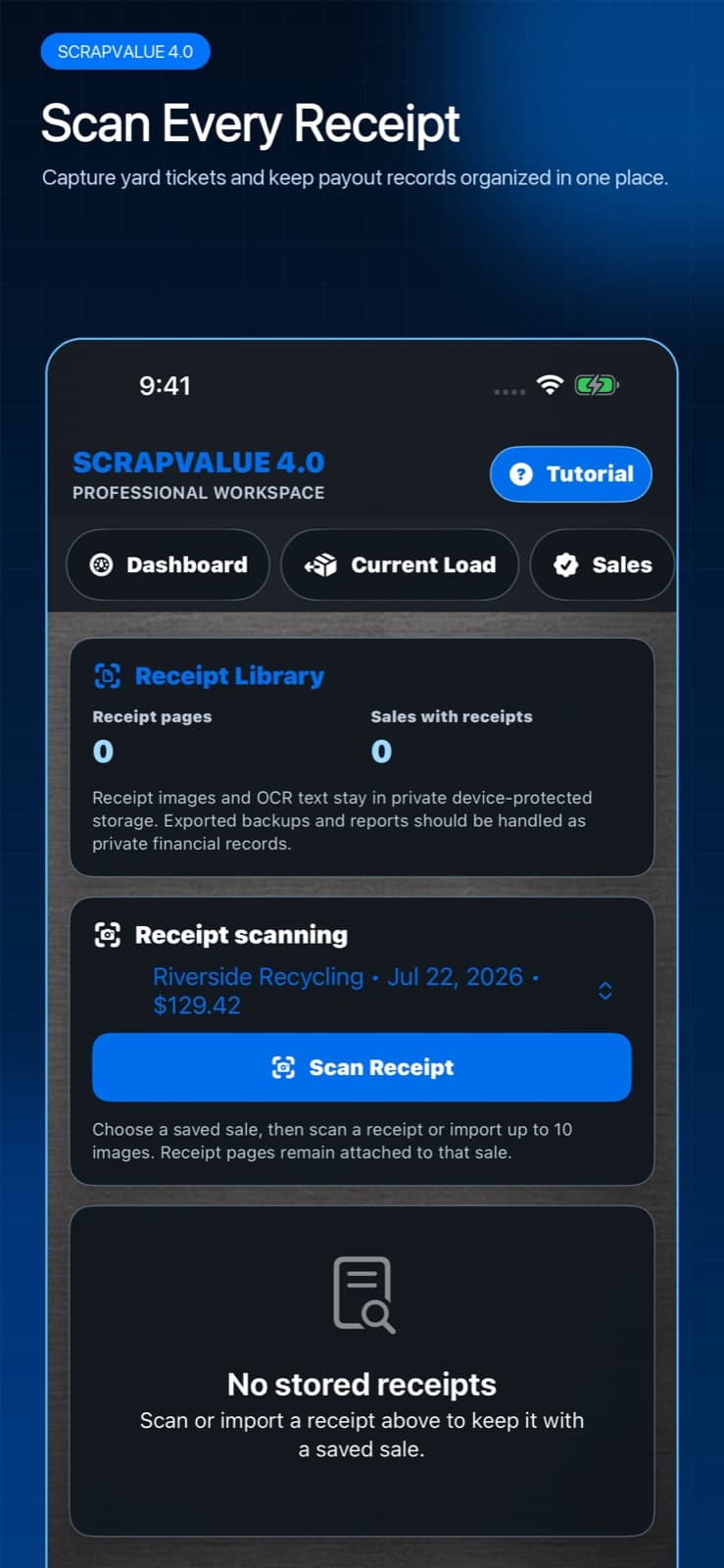
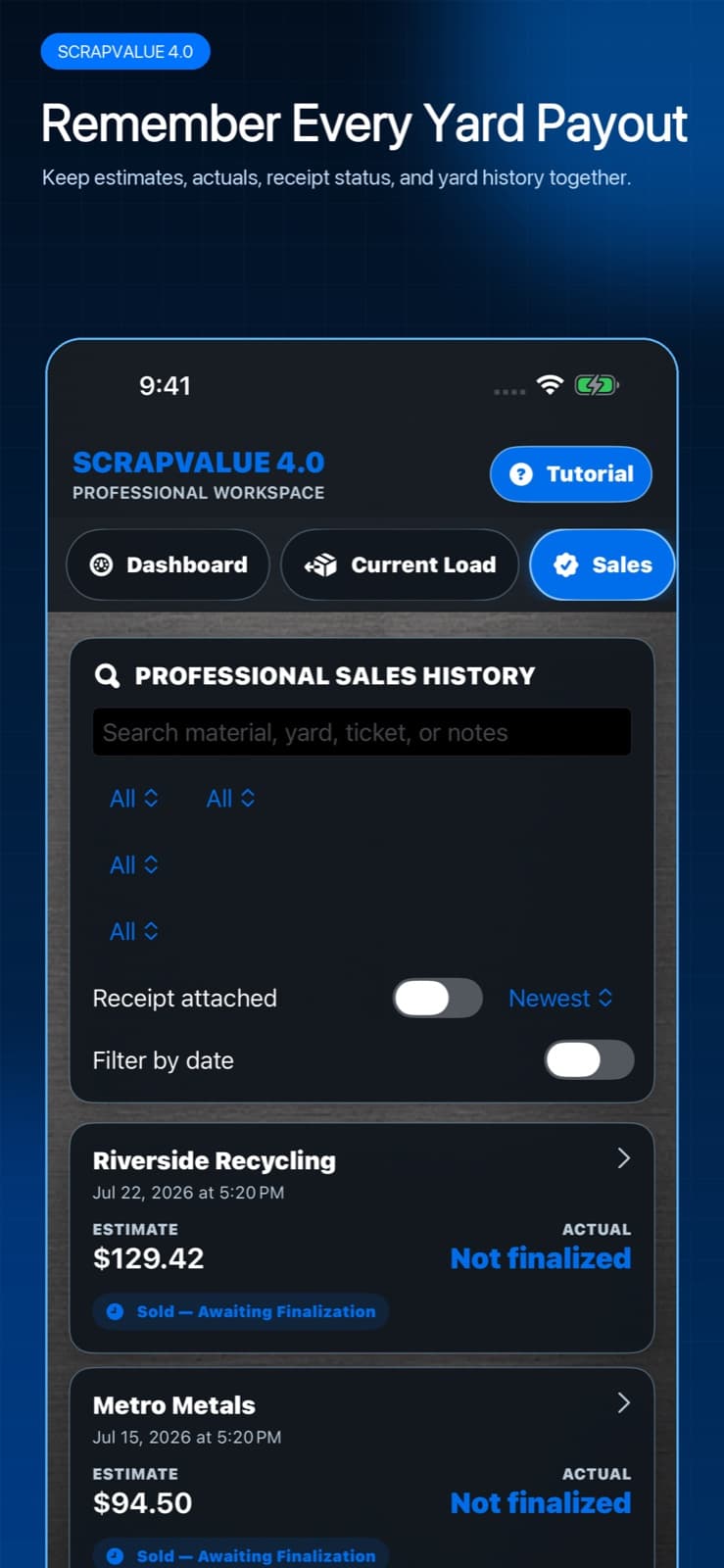
Record the yard, date, quoted price, scale weight, final grade, payout, and trip cost. Scan the receipt into the saved sale while the paper and explanation are still available. If scrap sales are part of a business, keep supporting records in the system you use for income and expenses and consult a qualified tax professional about your situation.