The basic formula
Estimate scrap metal value one grade at a time: net material weight × the matching current yard quote = estimated line value. Add the line values for the mixed-load estimate. Pounds require a per-pound quote and kilograms require a per-kilogram quote. The buyer's final grade and certified scale determine the sale.
A mixed load is rarely paid as though every pound were the highest-value metal. Separating grades gives you a more useful estimate and a cleaner conversation at the scale.
| Field | Example | Why it matters |
|---|---|---|
| Material and assumed grade | Copper group A | Prevents the highest rate from being applied to unlike material |
| Net weight | Gross container weight − tare | Removes the bin, pallet, trailer, or other non-material weight |
| Matching quote | Rate A per lb | Keeps the grade, currency, and unit aligned |
| Quote source and time | Yard phone quote, 9:15 AM | Shows who supplied the rate and when it may expire |
| Estimated line value | Net weight × Rate A | Keeps the mixed-load total auditable |
Estimate your load in five steps
Use a repeatable process so the estimate can be compared with the final scale ticket.
- Separate the load by material and grade—for example, insulated copper wire, bare copper, brass, aluminum, stainless steel, and prepared or unprepared steel.
- Remove obvious non-metal attachments only when it is safe, lawful, and worth the time. Never burn insulation or coatings.
- Weigh each group. A platform scale is useful for containers; record and subtract the empty container weight.
- Call the yard for its current buying quote and ask how it grades your exact material. Prices and definitions vary by yard, location, preparation, and market conditions.
- Multiply each weight by its matching quote, add the material estimates, and compare the result with fuel, time, tolls, and other trip costs.
Example without a market-price claim
Suppose a loaded copper bin weighs 22 pounds and the empty bin weighs 4 pounds. The net copper weight is 18 pounds. If your chosen yard quotes that exact grade at X dollars per pound, the estimated line value is (22 − 4) × X, or 18 × X. Repeat the calculation for every other grade, then add the results.
This method deliberately uses the quote you received instead of a generic internet price. The yard's scale weight and grading decision determine the actual payout.
What can change the final payout
An estimate is a planning tool, not a guaranteed offer. Common differences come from material grade, contamination, moisture, attachments, prepared-size rules, scale weight, minimum quantities, and price movement between the quote and the sale.
- Ask how long a quote is valid and whether it requires a minimum weight.
- Photograph or label sorted groups so you can review a grade change.
- Keep the scale ticket and record the final weight, grade, and payout for future estimates.
Questions to ask before trusting the estimate
A usable quote describes the same material, preparation, unit, and timing as the load you plan to sell. Ask the buyer to clarify each condition while the material is still separated and easy to describe.
- What exact buying grade fits this material, and what would disqualify it?
- Is the rate per pound, kilogram, short ton, or metric tonne?
- How long is the quote valid, and does it require a minimum quantity?
- Are there deductions, fees, or preparation requirements not included in the headline rate?
- Will the ticket show grade lines, gross, tare, net, deductions, and payout?
Use ScrapValue for the repeatable part
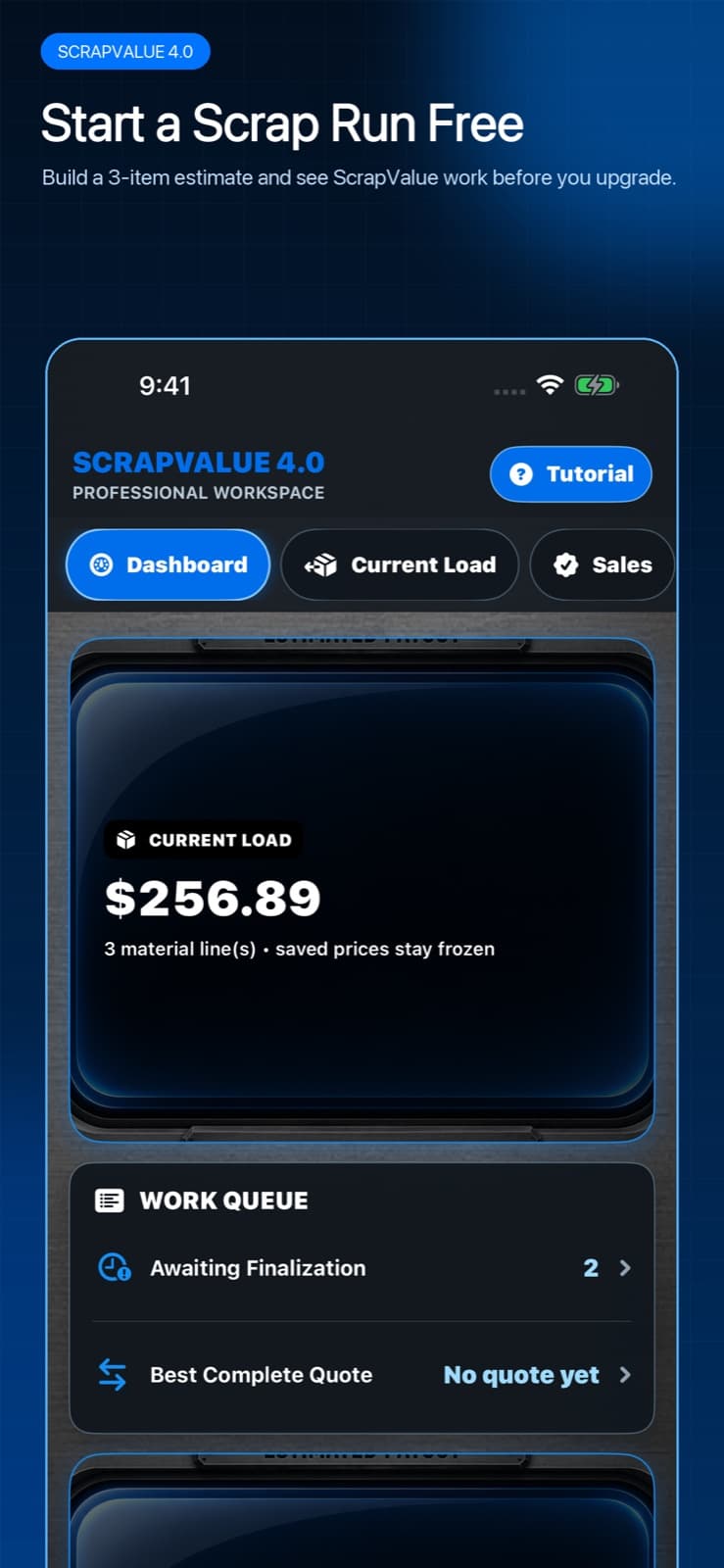
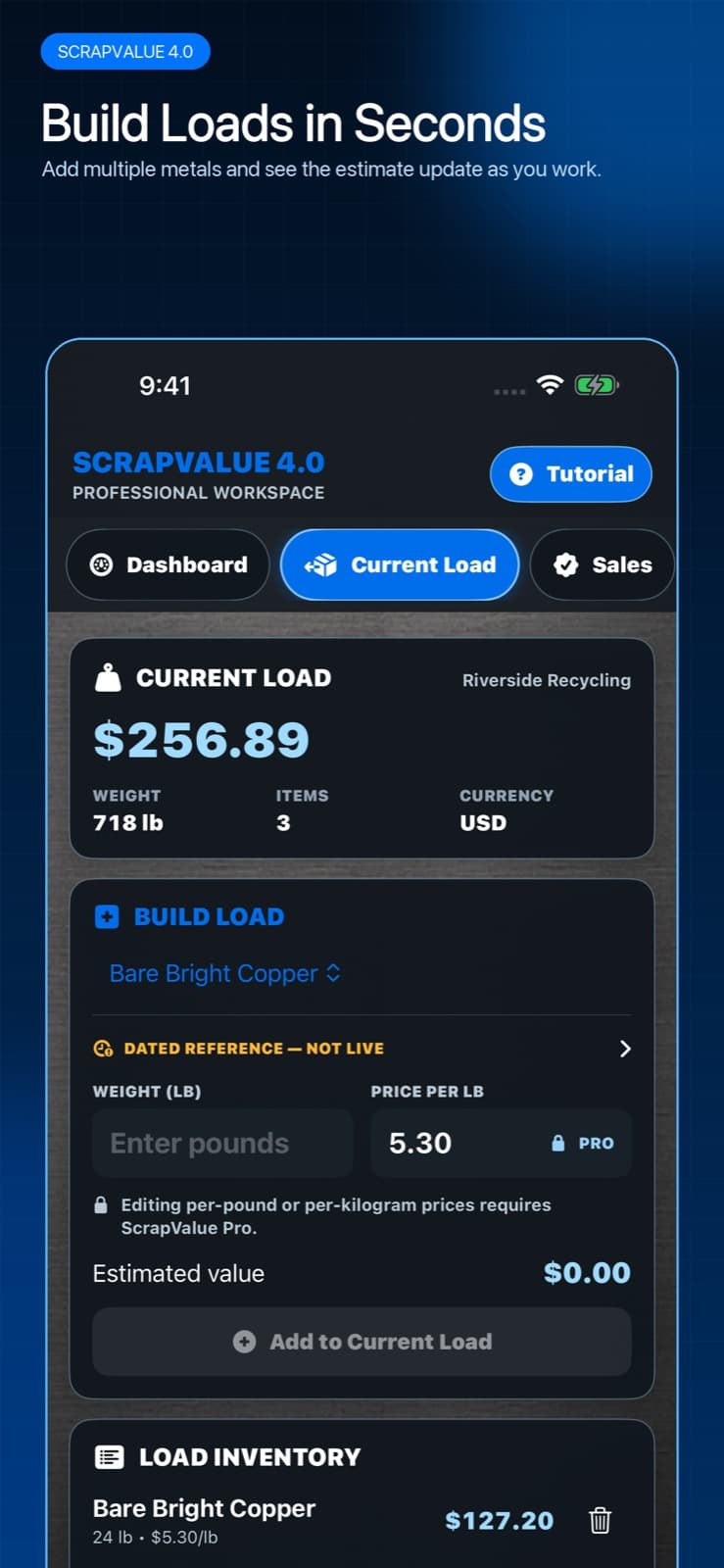
ScrapValue lets you enter material and weight information, estimate a mixed load, and save the run. The free version is enough to try a three-line load. Using your own local quote in ScrapValue Pro makes the calculation specific to the yard you plan to visit.
Questions people ask
Common questions
How do I calculate scrap metal value?
For each confirmed grade, multiply net weight by the matching current yard quote, then add the line values. Keep currency and weight units aligned and treat the result as an estimate until the buyer completes the sale.
Should I use an online scrap price in the calculation?
Use a current quote from the yard you may visit whenever possible. Commodity benchmarks and online reference prices may explain direction, but they do not establish a local offer for your material.
What is net scrap weight?
Net weight is the material weight after subtracting the empty container or vehicle tare from the compatible gross weight. Do not subtract unlike measurements or claim more precision than the scales support.
Why can the final scrap payout differ from my estimate?
The buyer may assign a different grade, record a different certified weight, apply accepted deductions or fees, or use a changed rate after a quote expires. Preserve the original estimate and compare it with the ticket.