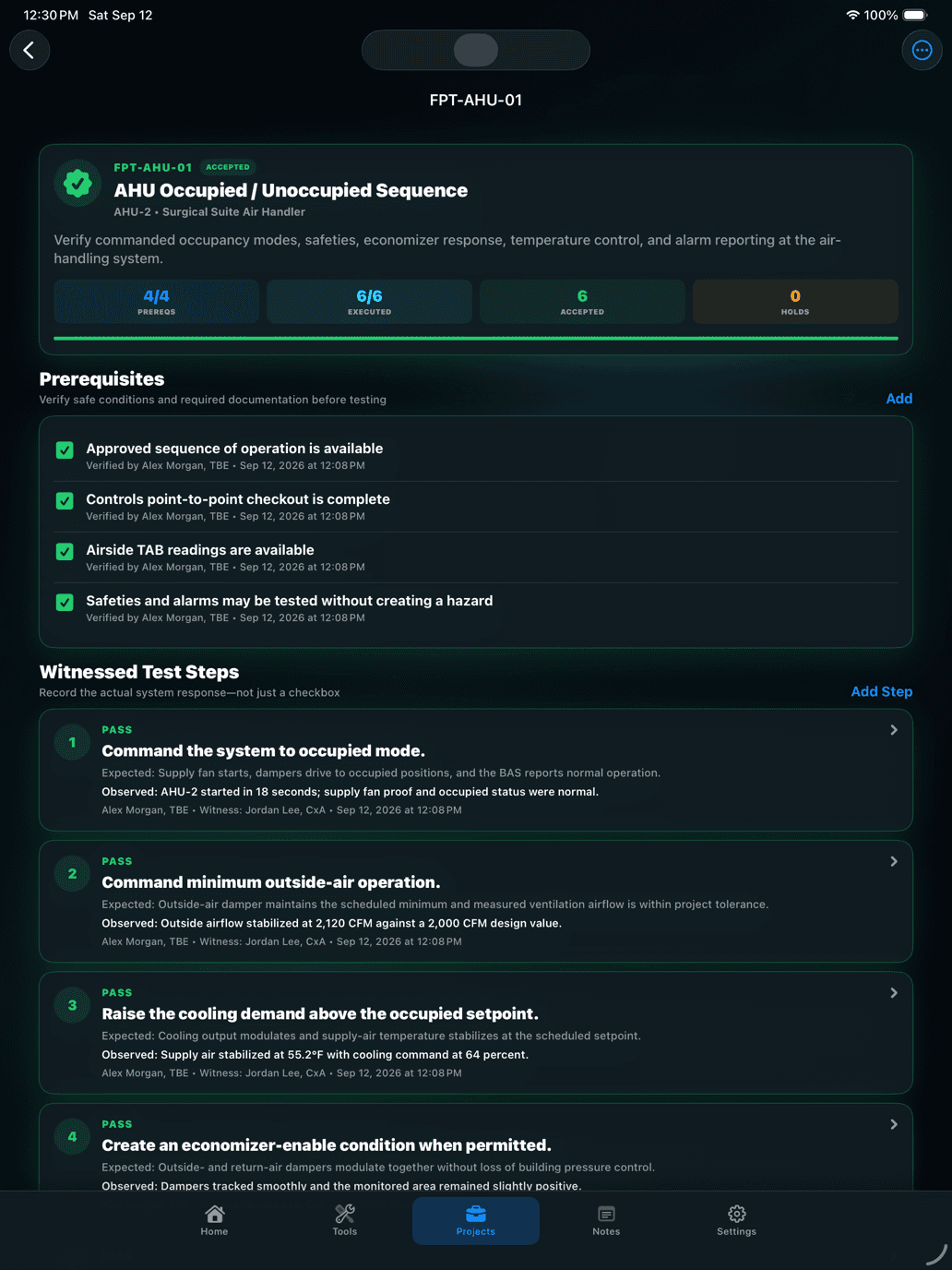
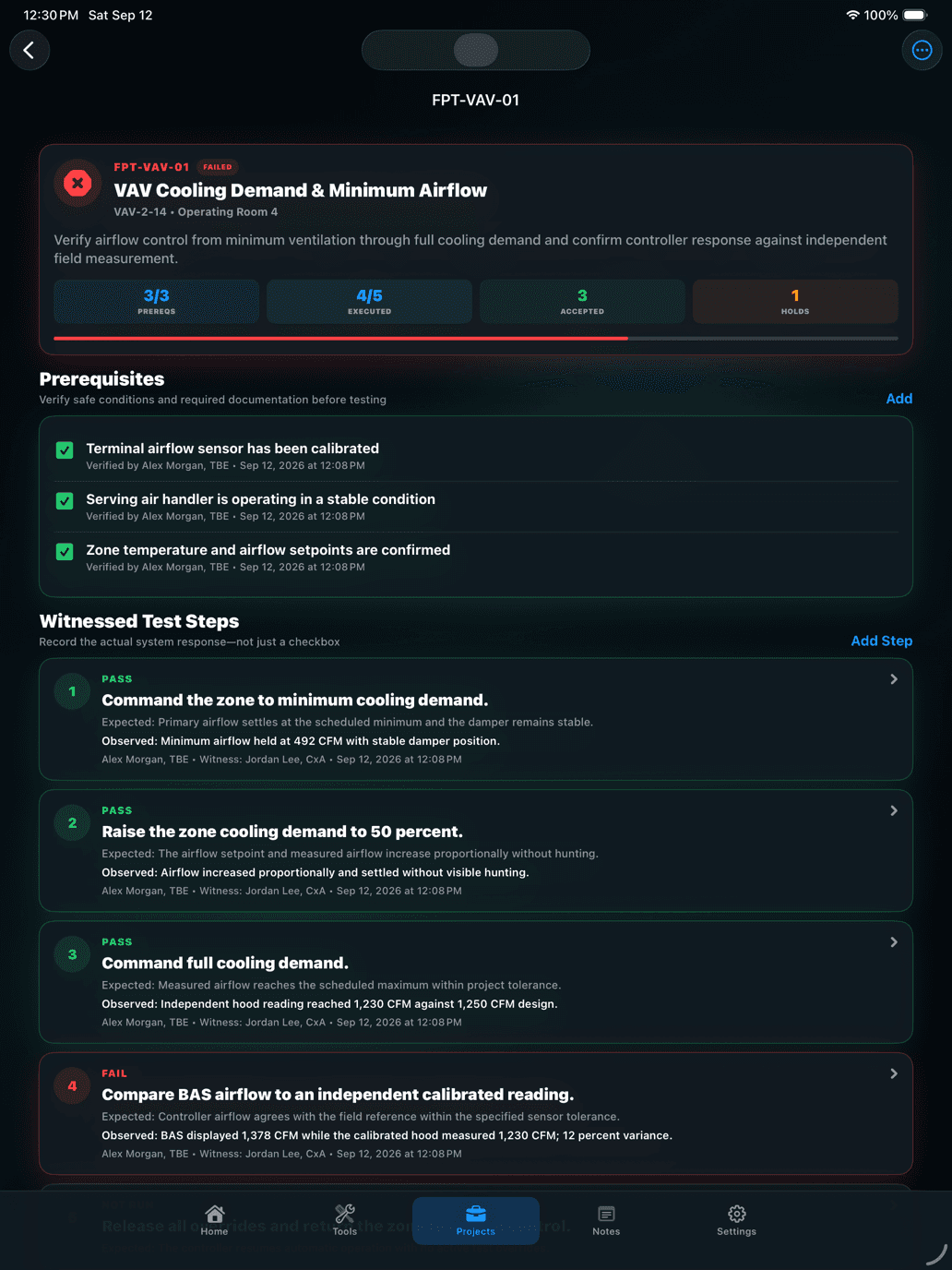
Make every test step auditable
Write an observable expected response, capture what actually happened, identify the technician and witness, and use failed or blocked states instead of forcing an acceptance when evidence is incomplete.
Make the project active before saving
A result without the correct project, system, equipment, test point, and instrument becomes difficult to defend later. Check the active-project context before recording professional evidence.
Treat the KPI as a review prompt
Commissioning-readiness visibility can reveal unaccepted functional tests, missing measurements, failed tolerances, unresolved deficiencies, expired calibration, or incomplete sign-off, but it does not replace professional judgment or project requirements.
Read the report like the recipient
Before sharing, verify names, equipment context, inputs, units, results, checklist state, notes, exclusions, and the destination that will receive the file.
Common mistakes to avoid
These shortcuts weaken the Goodale’s HVAC Fieldbook experience or create expectations the product is not designed to meet.
- Accepting a functional test without recording the actual observed response
- Entering a nameplate value when the workflow requires a measured value
- Mixing pressure, temperature, power, or flow units without checking the selected unit
- Sharing a report before removing unrelated confidential customer or project information
Build the next session from evidence
The workflow succeeds when functional-test evidence is witnessed and reviewable, calculations are technically appropriate, phased readings and tolerances are traceable, unresolved work is visible, instruments and approvals are documented, and the final handoff explains what was tested and measured without overstating what the app proves.
After each session, choose one thing to preserve and one thing to adjust. That small review keeps Goodale’s HVAC Fieldbook focused on its real purpose rather than turning the app into another collection of screens.