The problem behind Goodale’s HVAC Fieldbook
A commissioning result becomes defensible when the record shows the prerequisite, commanded condition, expected response, actual observation, result, technician, witness, and time—along with the related system measurements and deficiencies. Goodale’s HVAC Fieldbook is designed around that complete evidence trail instead of treating a calculator result or checkbox as the end of the work.
Goodale’s HVAC Fieldbook connects witnessed functional-performance testing with controlled commissioning projects, phased readings, evidence-based readiness, signed closeout, professional reports, and 29 supporting field calculations.
Goodale’s HVAC Fieldbook is designed for HVAC technicians, TAB specialists, engineers, commissioning providers, and field teams that need witnessed sequences, measurements, tolerances, deficiencies, instruments, and approvals to stay together. The goal is not to add another screen to the day; it is to make the complete decision or experience easier to understand from beginning to end.
One connected experience beats a pile of separate tools
Goodale’s HVAC Fieldbook executes witnessed functional-performance tests and connects their expected-versus-observed evidence to phased measurements, design tolerances, deficiencies, calibrated instruments, approvals, and customer-ready reporting.
Built for mechanical rooms, rooftops, job trailers, balancing routes, and engineering review. Core workflows work offline, no account is required, and project records stay on your device.
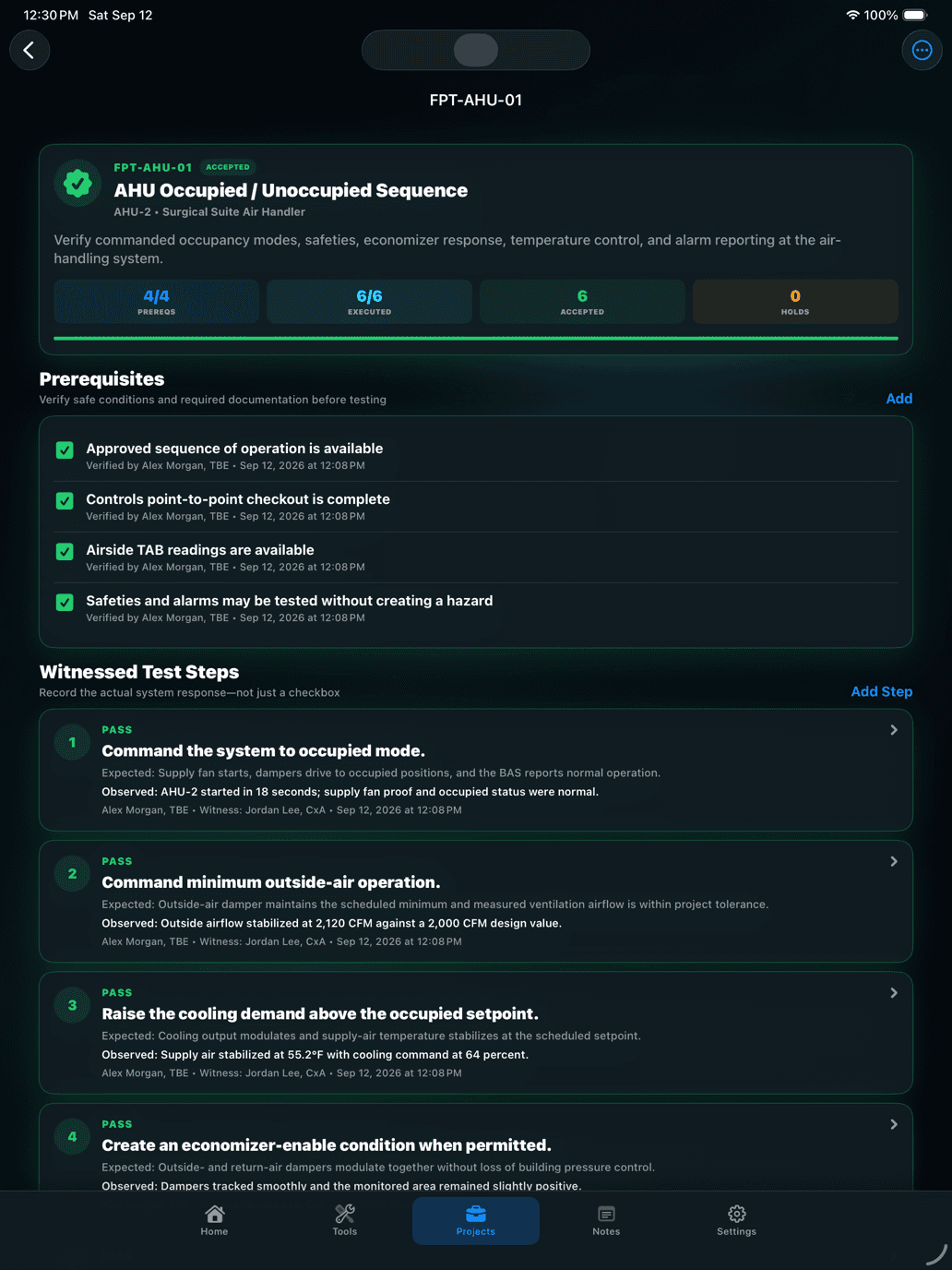
- Witnessed functional testing: Start with AHU, VAV, or hydronic pump procedures—or build your own. Verify prerequisites, execute ordered commands, and capture the actual system response, result, technician, witness, notes, and timestamp.
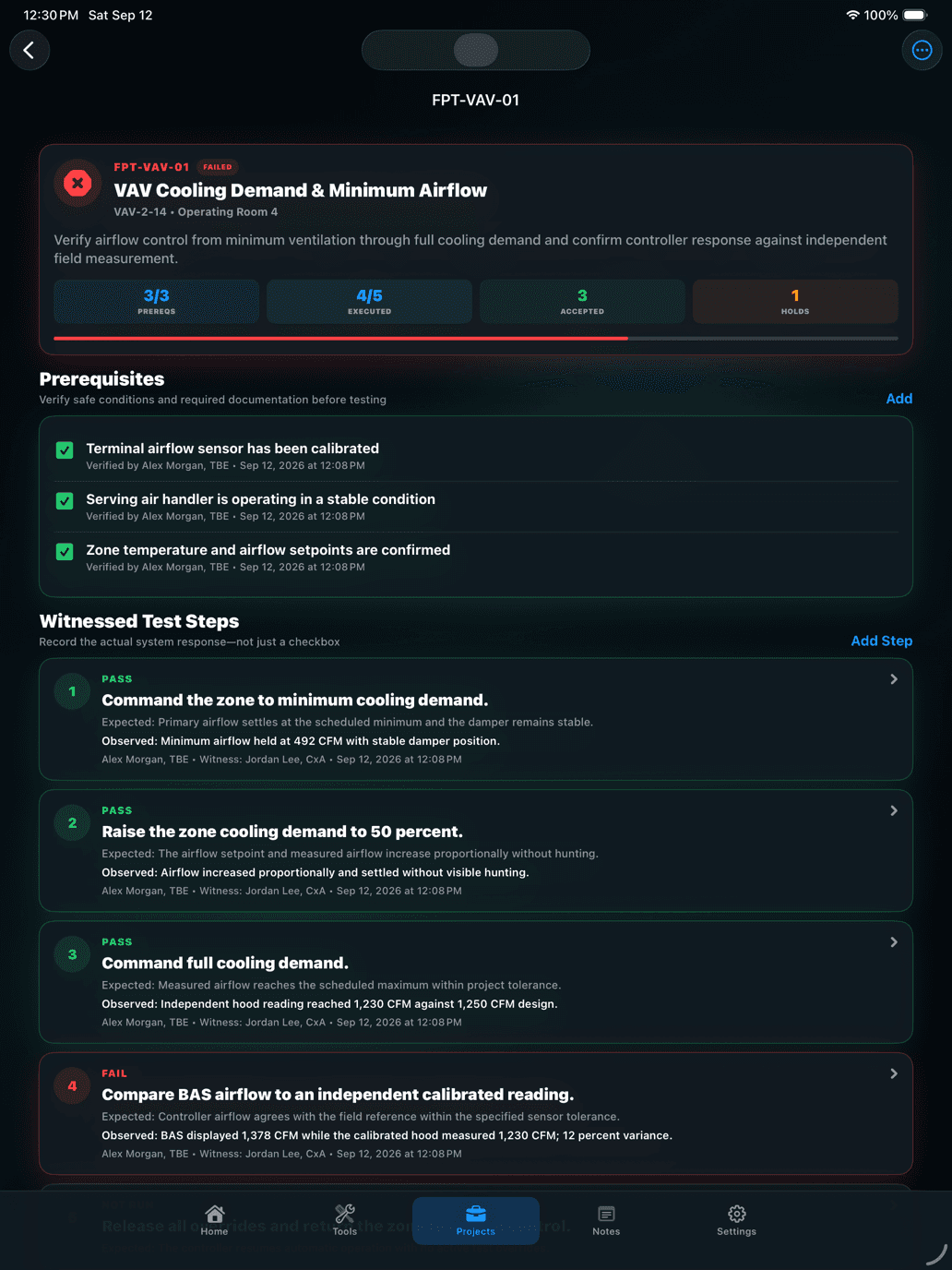
- Acceptance that means something: See accepted, failed, blocked, not-run, and not-applicable states clearly. Unverified prerequisites, incomplete required steps, failures, and blocks hold project closeout automatically.
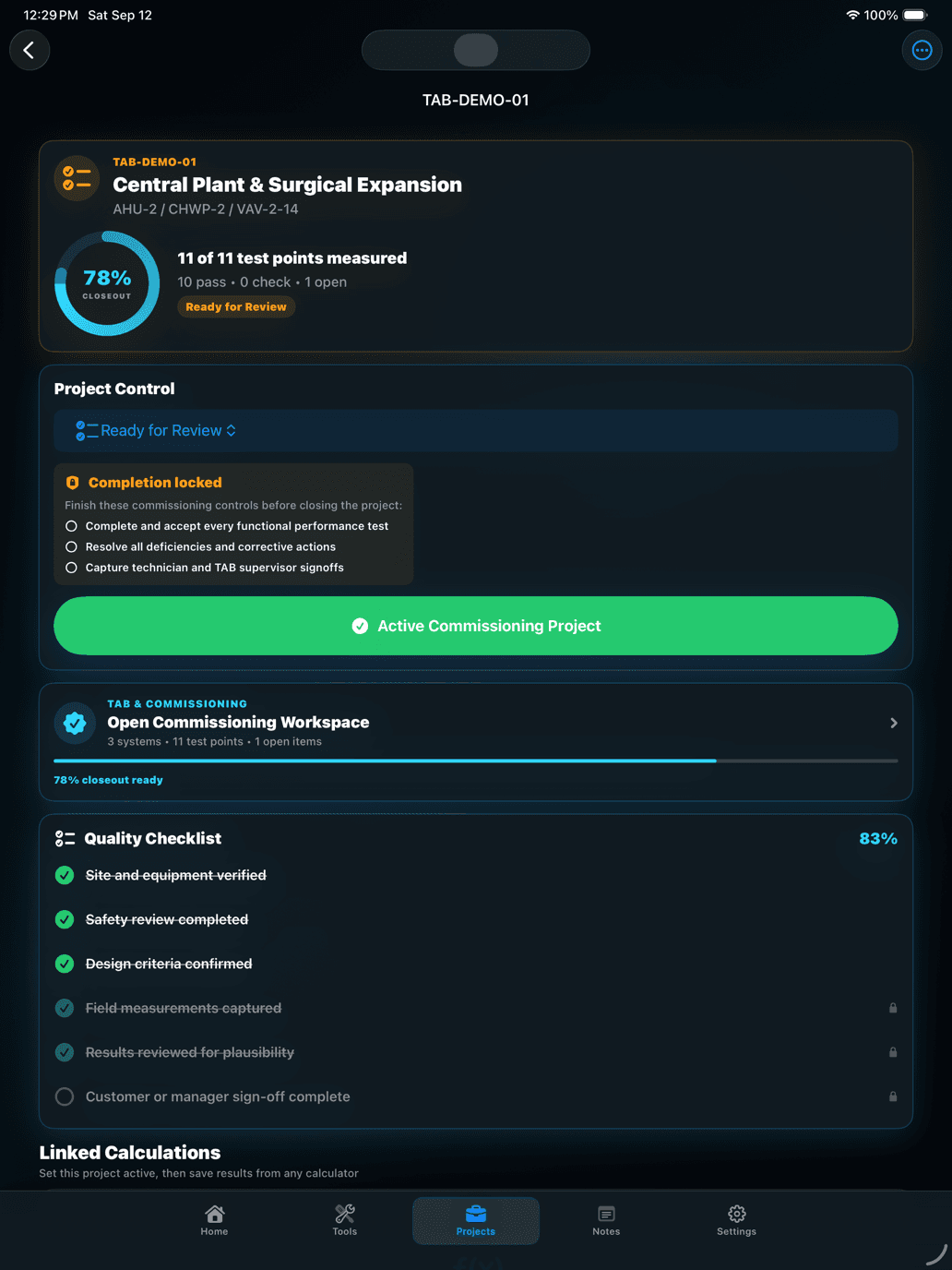
- Controlled commissioning projects: Organize projects by customer, site, area, system, equipment, and test point. Capture initial, adjusted, and final readings with units, tolerances, timestamps, and technician context.
- TAB and engineering depth: Use 29 airside, hydronic, psychrometric, refrigeration, electrical, fan, pump, efficiency, and conversion tools—including traverses, pitot airflow, total external static, tons/GPM, water pressure, and valve Cv.
- Deficiencies and closeout: Track corrective actions, verification notes, instrument calibration, evidence-driven readiness, preparer and reviewer details, customer approval, and a local signature.
The details that earn a place in the routine
Make every test step auditable: Write an observable expected response, capture what actually happened, identify the technician and witness, and use failed or blocked states instead of forcing an acceptance when evidence is incomplete.
Make the project active before saving: A result without the correct project, system, equipment, test point, and instrument becomes difficult to defend later. Check the active-project context before recording professional evidence.
Treat the KPI as a review prompt: Commissioning-readiness visibility can reveal unaccepted functional tests, missing measurements, failed tolerances, unresolved deficiencies, expired calibration, or incomplete sign-off, but it does not replace professional judgment or project requirements.
Useful promises need honest boundaries
Goodale’s HVAC Fieldbook 1.0 is available now for iPhone and iPad on the Apple App Store.
Goodale’s HVAC Fieldbook 1.0 is available now for iPhone and iPad on the Apple App Store. Functional tests and other core records stay locally on the device, no Goodale Studios account is required, and exports leave the app only when the user chooses a destination through Apple's share sheet.
The result that matters
The workflow succeeds when functional-test evidence is witnessed and reviewable, calculations are technically appropriate, phased readings and tolerances are traceable, unresolved work is visible, instruments and approvals are documented, and the final handoff explains what was tested and measured without overstating what the app proves.
That is the standard behind Goodale’s HVAC Fieldbook: a focused app should leave the next decision clearer, the completed work or play session more satisfying, and the value easier to explain than it was before the first tap.